
Water is a limited resource and is critical to conducting business in an office or factory setting. Global water shortages have led many companies to take a more proactive approach to reduce their usage of water.
The benefits of decreasing your water usage includes being more environmentally sustainable, reducing costs, fulfilment of legal obligations and improving your business image for being environmentally friendly.
This guide provides you with ways to conserve water in your office and factory.
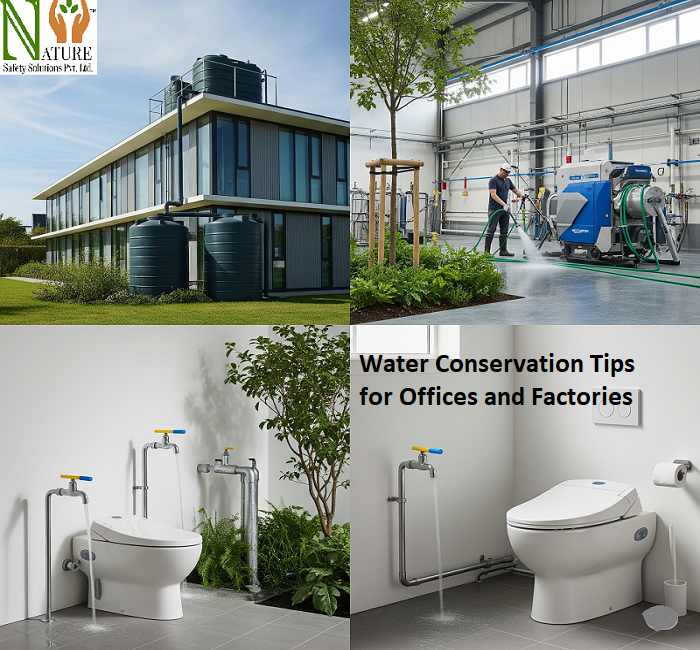
Importance of Water Conservation
In addition to providing a benefit to the environment, saving water will also have positive effects on businesses. Saving water will reduce the amount of water that is taken from the local water supply and negatively affects the environment, which helps to provide for the continued sustainability of the environment.
Saving water will also result in reduced utility bills for businesses in both terms of energy and water costs. As a result of Water Efficient Management Practices, businesses will be able to meet industry standards and maintain compliance with the rules and regulations set forth by regulatory Government Agencies, thereby avoiding fines and limitations on their operations.
Demonstrating to customers and the local community that a business practices a commitment to the conservation of our water resources, the responsible use of resources and aligns with the principles of sustainability will create a positive image of the business.
Water Conservation in Office Environments
Even though offices may not use large volumes of water compared to factories, they still have plenty of opportunities to reduce waste.
1. Repair Leaks
consistently check for leaks in faucets and toilet systems. A single leaking faucet or toilet can waste thousands of liters of water each year. Be proactive in finding and fixing leaks as soon as possible after they are discovered through routine inspection.
2. Use Water-Saving Devices
Replace standard-type fixtures such as faucets, toilets, and urinals with low-flow or dual-flush fixtures. These types of fixtures can help conserve water with little or no impact on how well they operate.
3. Inform Employees About Water Conservation
Encourage employees to conserve water through encouraging daily safety practices: avoid wasting, manage moisture, and respect nature. Hang signs above restrooms and kitchen sinks.
4. Make the Most Use of the Kitchen and Pantry
Use appliances that use water efficiently, don’t allow water to run down the drain while washing dishes. Encourage to use reusable cups and bottles.
5. Control Outdoor Water Use
If there is a landscape area on the building, use native plant species or drought tolerant varieties of plant material. Set up a watering system (drip) for outdoor watering, so the cool periods of the day can be optimal for watering your landscape.
6. Use Cleaning Services that Minimize Water Use
Use cleaning companies that work with the lowest volumes of water using high-efficiency cleaning equipment like microfiber mopping systems and non-toxic cleaning solutions that use a low amount of water.
Water Conservation in Factories and Industrial Settings
Factories typically consume more water due to production, cooling, and cleaning processes. However, they also have the greatest potential for savings.
1. Conduct a Water Audit
Start with a full audit of your water usage to identify where water is used most and where savings can be made.
2. Reuse and Recycle Water
Implement systems to treat and reuse process water. Recycling rinse water or reusing cooling water can significantly reduce consumption.
3. Upgrade Equipment
Modern machines are often designed with efficiency in mind. Replace outdated equipment with models that use less water per operation.
4. Use Closed-Loop Cooling Systems
Instead of single-pass systems that discharge water after one use, switch to closed-loop systems that continuously reuse cooling water.
5. Monitor Water Usage
Install water meters in different sections of the plant to detect abnormal usage patterns, spot leaks, and identify high-consumption areas.
6. Employee Training and Involvement
Train your workforce on water-saving techniques and encourage them to participate in sustainability programs. Small behavioral changes can lead to big results.
7. Choose for Dry or Steam Cleaning
Reduce water used in cleaning by switching to dry cleaning or steam-based alternatives wherever possible, especially for equipment and floors.
Creating a Water-Conscious Workplace Culture
For any conservation strategy to succeed, the mindset of the people involved is key. Building a water-conscious culture means:
Leading by example: Management should actively support and promote water-saving measures.
Employee engagement: Create a “green team” or incentive program that rewards ideas and participation in conservation efforts.
Regular communication: Use emails, digital boards, and workshops to keep water-saving goals top of mind.
Tracking progress: Monitor water usage monthly and share progress with staff to encourage collective effort.
Also read:-
Pingback: Stay Safe at Work: 10 Daily Manufacturing Safety Tips -