
Safety is More than A Checklist Today Safety is not just a checklist, it’s also a way to work and with this mindset, the concept of safety becomes a value and a behaviour at all levels of the company (from the leadership team down to new employees). This culture continues to develop and expand with two keys: (1) Effective Training and (2) Strong Leadership.
Why A Safety-First Culture Is Important
A safety-first culture means that when any decision is made, the health and safety of all employees are top of mind when making that decision. Companies with a strong culture of Safety will have fewer accidents, greater morale among employees and increased overall productivity.
Safety will be more than just a requirement or obligation, it will be viewed as an obligation or duty of each member of the organisation; it will also be an opportunity for employees to share in a common value and take pride in their efforts.
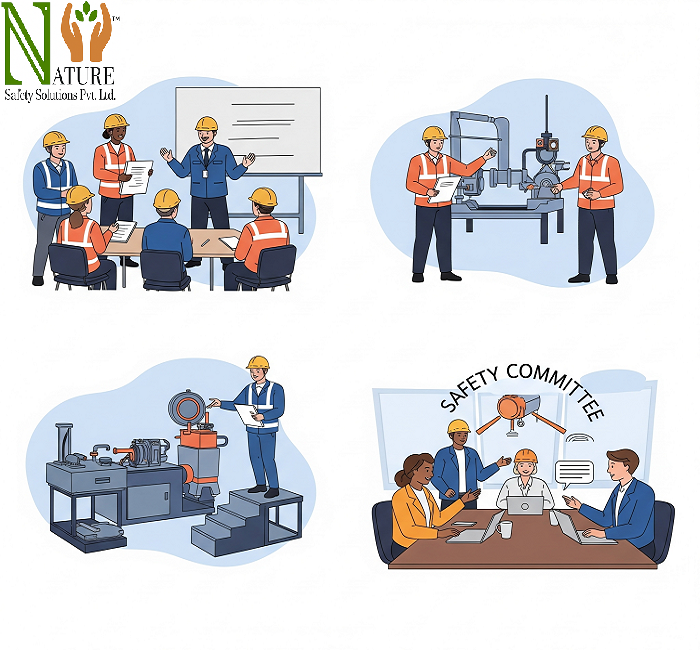
Employee Training Provides Safety for Everyone
1. Employee Onboarding and Employee Learning
All employees must receive thorough training from the day they start. This should include:
– General Workplace Safety Rules
– Hazards and Precautions Relative To Your Job
– Emergency Procedures
However, employee training does not end when employees complete their onboarding. Employees need to continue to learn through workshops, drills and refresher courses, which keeps them up to date on best practices and emphasizes the importance of safety.
2. Practical Hands-On Demonstrations
Training that is the most effective provides hands-on experience (as opposed to lecture-based). Experiential learning methods, such as simulations, role-play, and demonstrations of the equipment, aid in developing the connection between what is taught theoretically to how it actually works in practice. Employees will have a greater chance of using and remembering the information they gain through an experiential training approach than by simply receiving traditional instruction.
3. Simple Communication
Training should be presented in a manner that is clear and understandable to all learners. This entails using easy-to-understand words, translating training materials when necessary and accommodating individual differences in learning. Safety information should be made available to all.
How to Become a Good Leader
1. Be a Role Model
As a leader, you should be a good example for your employees. When workers see their supervisor or manager consistently following all the correct safety procedures, most will also adhere to them. Providing visible support from the top (leadership) to the bottom (employees) sends a strong message that safety is important.
2. Hold Everyone Accountable
Having a safety culture means that you have created clearly defined expectations and have created a system of accountability for everyone who works within your organization. As part of your overall safety program you will need to routinely inspect areas of work for unsafe conditions and unsafe behaviours, track and review safety metrics and provide timely feedback.
If an employee is found in violation of one of your organization’s safety rules or procedures you will need to enforce immediate consequences for that behaviour (i.e. suspension, termination) no matter what level of employee that person may be.
3. Empower Employees
All employees have a responsibility for the safety of themselves and their co-workers. To achieve this level of accountability, leaders must encourage employees to report hazards, report near-misses, and provide suggestions for improvement. When employees can communicate openly and honestly to their supervisors and management without fear of retaliation it creates a foundation for trust and a culture of proactivity with respect to safety.
4. Ways to Recognize Safe Behavior
Utilization of Positive Recognition as a Psychological tool, motivating Others. As safety is recognized and rewarded, there is a desire for other Employees to imitate those behaviours. Good morale and engagement can also be created by celebrating Employee Safety Milestones, (Accident-Free Days or Successful Drills).
Sustaining a Safety-First Culture
Establishing a “Safety-First Culture” is not just an initiative that can be implemented once; it is an evolving Journey for an Organization. Here are a few suggested methods for Successfully creating a Sustained Safety-First Culture:
- Continue Reviewing and Updating Policies for New Risks & Regulations.
- Include Employees in the Safety Planning Process to Create Different Perspectives and Buy-In from the Employees.
- Evaluate Performance via Safety Audits, Tracking Employee Safety Incidents, and Receiving Feedback from Employees.
- Develop Leadership Skills so Safety-Minded Leaders have the Ability to Carry Forward the Safety Culture of an Organization.
Read also:-