
When we do DIY projects at home, we often feel excited because of the new paint colours we want to use, or we have some small repairs we want to make, or just because we want to improve on our homes over the weekends. However, the one tool that could cause a lot of problems for most people is a ladder.
Even a small mistake while working on a ladder can lead to injuries that take weeks to recover from. Knowing some basic safety tips for using a ladder will help you complete any project that you have planned in your home with greater safety for both yourself and your family.
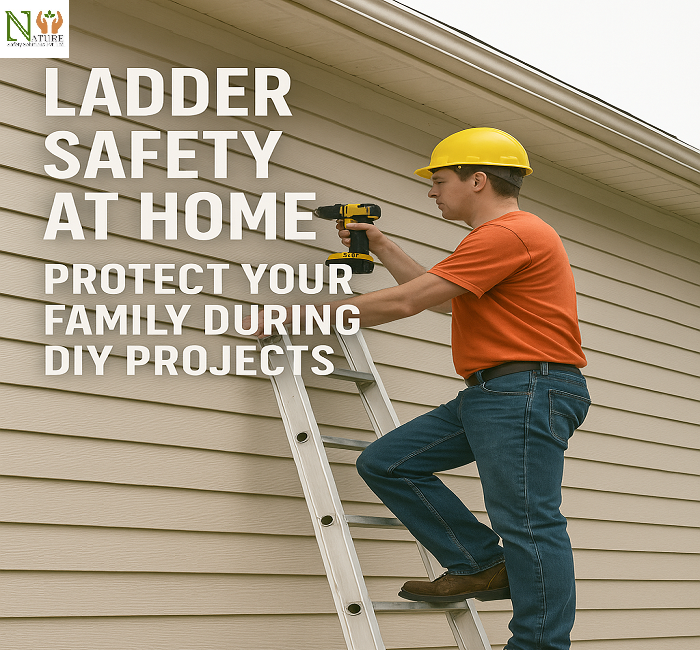
Select a Ladder Applicable to the Job
Every task requires the right ladder. A common error is choosing the incorrect type of ladder.
- For the more minor indoor jobs, selection of a step ladder is appropriate.
- If your job is going to be done outside and also requires height, you should select an extension ladder.
- Select a platform ladder if you will be standing on the ladder for extended periods and prefer to be in a comfortable position.
- Similar to selecting the correct tool, a person needs to carefully select the appropriate ladder to maintain better balance and control while working on the ladder.
Check For Hazards Before You Use A Ladder
Before you climb a ladder, check it over!
Is there any wobble in the ladder? Are all of the rungs level? Do all of the locking mechanisms work?
Like many other tools, ladders wear out with time and can become unsafe if you don’t inspect them beforehand. It is possible for a small crack or loose hinge to become very dangerous in a short amount of time. If you see anything that doesn’t look right, do not take a chance. Be safe and check your equipment before you leave the ground!
Professionals Utilize Properly Placing Ladders
The angle at which you position your ladder depends significantly upon the surface beneath your ladder.
The location must be dry (even) or have good traction, i.e. hard surfaces; avoid placing your extension ladder on slippery tiles, in muddy areas, or near failure/loading areas due to debris etc. The basic rule-of-thumb is that for every 4 feet of ladder height, the bottom should be moved out from the wall by 1 foot.
Using this angle (4:1 Ratio) provides a more stable base and reduces the potential for slipping/have a lesser degree of overturnability.
Three-Point Contact: A Fundamental Safety Rule
To maintain balance while on a ladder, establish two feet and one hand or two hands and one foot in addition to your body on the ladder.
This establishes a strong point of contact to maintain balance even if you slip or shift slightly on the ladder.
Do Not Let Your Body Extend Beyond Ladder Width
Most accidents involving ladders result from people leaning too far from the vertical line of the ladder.
If the body is overextended beyond either side of the rail then the user is overextending themselves off the sides of the ladder and this is not safe. If you are leaning off the ladder, it is safer to take the time to adjust the ladder rather than risk falling.
When Climbing, Use Your Bare Hands
When climbing a ladder, using tools may make it more difficult and cumbersome to climb on your own.
Instead of trying to hold on to your tools, use a tool belt to carry them around your waist; alternatively, when you are secured on the ladder, use a small rope or hook to pull your tools up with you.
Having your hands free will allow you to have better control of your movements and better grip on whatever you are climbing on.
Protect Your Work Area from Children and Pets
Children and pets are naturally curious and can easily run underneath ladders, bump into them, or cause distraction at an inopportune moment.
It’s essential to create barriers around the area where you are working, or you may want to ask someone to keep watch over your children or pets during your climb up the ladder.
Follow Your Ladder’s Purpose
A ladder’s purpose is for climbing, not for attempting to balance at the top step, bridging between two objects, or leaning against something while the ladder is closed. Risking your balance by standing too high and/or using the ladder incorrectly puts you at greater risk of losing your balance.
Choose the Correct Type of Shoes to Wear
By wearing non-slip shoes, you are less likely to slip while using a ladder. Non-slip shoes will provide stability for your feet. Shoes such as slippers, sandals, socks, and shoes with smooth soles are more likely to cause slips.
Choose shoes that offer a strong solid surface for your feet to grip, and that keep all of your weight distributed evenly across the foot; this should make it more difficult for you to slip.
Always Have a Buddy
The primary advantage of having a second person with you is that this added safety. Your buddy can keep the ladder steady, hand you tools, and provide assistance if something goes wrong. Even small jobs will become safer when you work with a buddy instead of on your own.
Also read…